

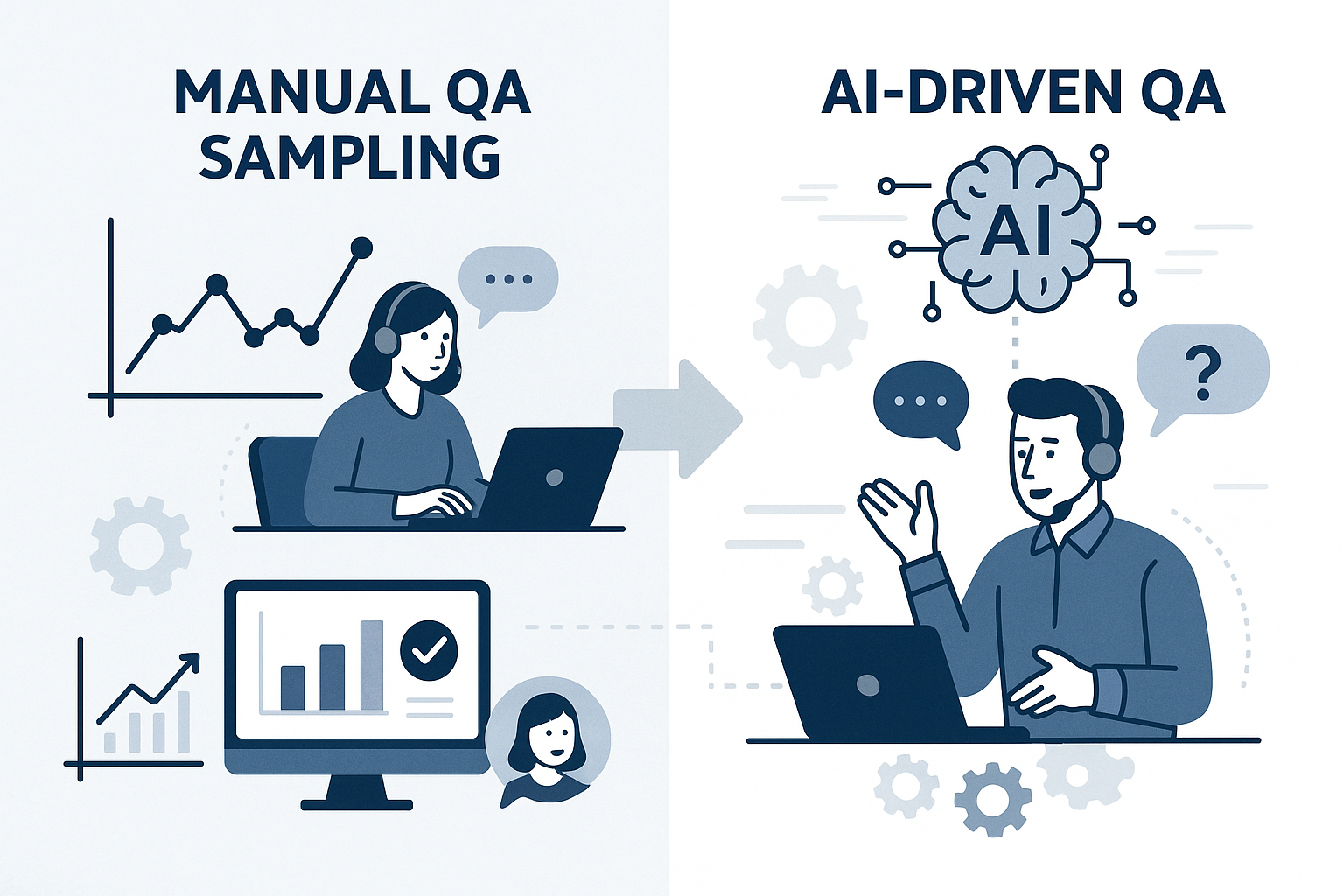
From 4% to 100%: Why Manual QA Sampling Leaves You Exposed
In today’s fast-paced digital landscape, ensuring the quality of customer interactions is more critical than ever. Companies are increasingly relying on quality assurance (QA) processes to maintain high standards in customer service. However, traditional manual QA sampling methods often fall short, leaving businesses exposed to potential risks. This article explores the limitations of manual QA sampling and how modern solutions like AI quality assurance, Salesforce QA tools, and emotion detection software can revolutionise the process.
The Limitations of Manual QA Sampling
Incomplete Coverage
Manual QA sampling typically reviews only a small percentage of customer interactions, often as low as 4%. This limited scope means that many interactions go unchecked, allowing potential issues to slip through the cracks. Incomplete coverage can lead to inconsistent customer service compliance, ultimately affecting customer satisfaction and brand reputation.
Human Error and Bias
Human evaluators are prone to errors and biases, which can skew the results of QA assessments. Personal biases may influence the evaluation of interactions, leading to inconsistent feedback and missed opportunities for improvement. This subjectivity can undermine the reliability of manual QA processes.
Time and Resource Intensive
Manual QA sampling is labour-intensive and time-consuming. Evaluators must listen to or read through numerous interactions, which can be a daunting task. This process not only consumes valuable resources but also delays the implementation of necessary improvements.
The Rise of AI Quality Assurance
Comprehensive Analysis
AI quality assurance offers a solution to the limitations of manual sampling by providing comprehensive analysis of all customer interactions. By leveraging machine learning algorithms, AI can evaluate 100% of interactions, ensuring no detail is overlooked. This comprehensive coverage enhances customer service compliance and helps maintain consistent quality standards.
Objective and Consistent Evaluations
AI-driven tools eliminate human error and bias, providing objective and consistent evaluations. These tools can assess interactions based on predefined criteria, ensuring that every interaction is judged fairly. This objectivity leads to more accurate insights and actionable feedback.
Efficiency and Scalability
AI quality assurance significantly reduces the time and resources required for QA processes. Automated systems can analyse vast amounts of data quickly, allowing businesses to scale their QA efforts without additional manpower. This efficiency enables companies to respond swiftly to emerging issues and trends.
Leveraging Salesforce QA Tools
Integration with Existing Systems
Salesforce QA tools seamlessly integrate with existing customer relationship management (CRM) systems, providing a unified platform for managing customer interactions. This integration allows businesses to streamline their QA processes and access valuable insights directly within their CRM environment.
Customisable Metrics
Salesforce QA tools offer customisable metrics, enabling businesses to tailor their QA processes to specific needs and objectives. By defining relevant criteria, companies can focus on areas that matter most to their operations, enhancing the overall effectiveness of their QA efforts.
Real-Time Monitoring
With Salesforce QA tools, businesses can monitor customer interactions in real time. This capability allows for immediate identification and resolution of issues, ensuring that customer service compliance is maintained at all times. Real-time monitoring also provides valuable data for continuous improvement initiatives.
Enhancing QA with Emotion Detection Software
Understanding Customer Sentiment
Emotion detection software analyses the emotional tone of customer interactions, providing insights into customer sentiment. By understanding how customers feel during interactions, businesses can tailor their responses to improve customer satisfaction and loyalty.
Identifying Emotional Triggers
Emotion detection software can identify specific triggers that lead to positive or negative emotions. By recognising these triggers, companies can adjust their strategies to enhance customer experiences and prevent potential issues.
Personalised Customer Interactions
By leveraging insights from emotion detection software, businesses can personalise customer interactions to better meet individual needs. Personalisation fosters stronger customer relationships and enhances overall service quality.
Actionable Insights for Businesses
Embrace Technology
To move from 4% to 100% coverage, businesses must embrace modern technology. Implementing AI quality assurance, Salesforce QA tools, and emotion detection software can transform QA processes, providing comprehensive, objective, and efficient evaluations.
Focus on Continuous Improvement
Quality assurance should be an ongoing process. By continuously analysing customer interactions and implementing improvements, businesses can maintain high standards and adapt to changing customer expectations.
Train and Support Staff
While technology plays a crucial role, human involvement remains essential. Training staff to use new tools effectively and supporting them in their roles ensures a smooth transition and maximises the benefits of modern QA solutions.
Conclusion
Manual QA sampling leaves businesses exposed to risks that can impact customer satisfaction and brand reputation. By adopting AI quality assurance, Salesforce QA tools, and emotion detection software, companies can achieve 100% coverage, ensuring consistent customer service compliance and enhanced customer experiences. Embracing these technologies not only mitigates risks but also positions businesses for success in an increasingly competitive market.