

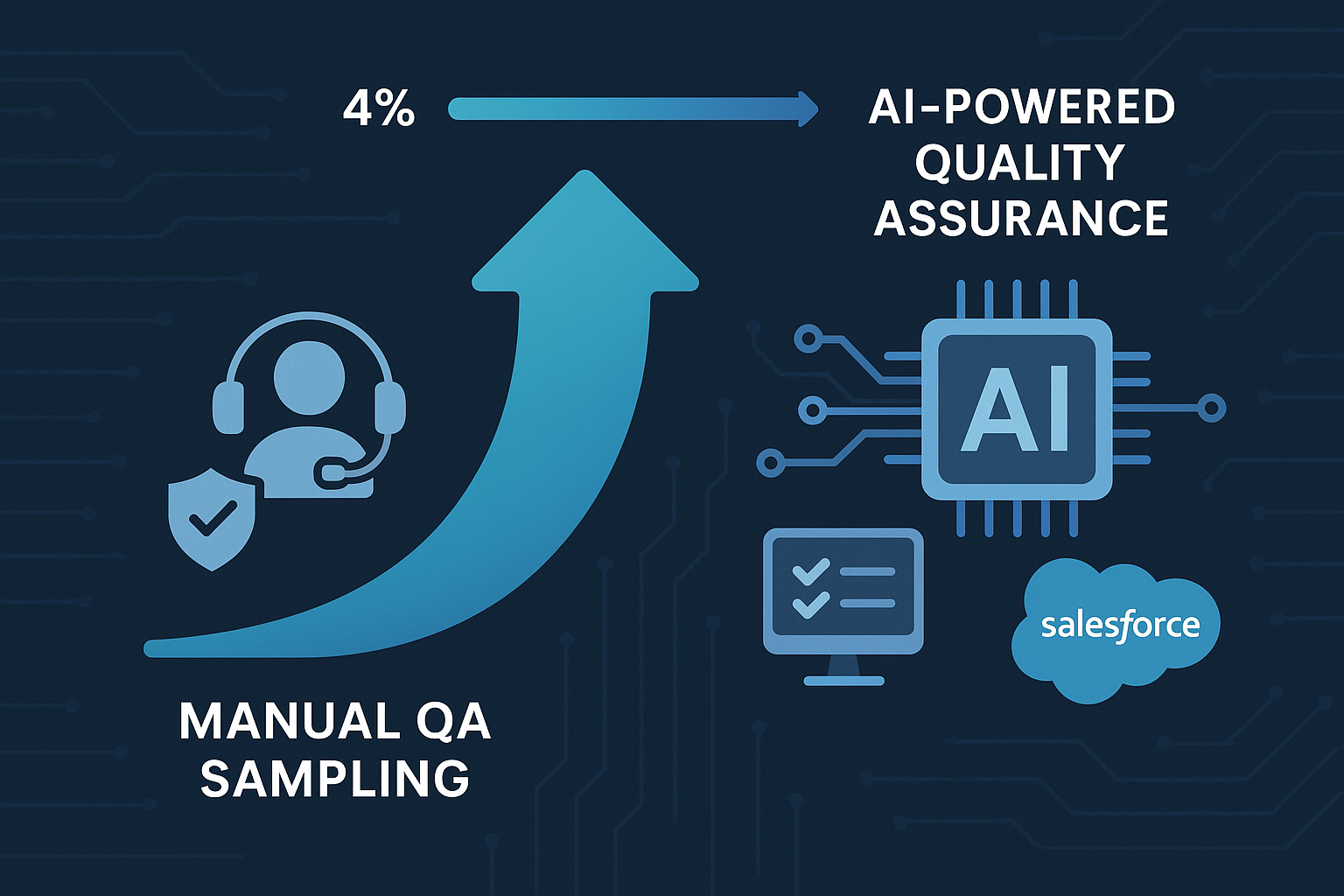
From 4% to 100%: Why Manual QA Sampling Leaves You Exposed
In today’s fast-paced digital landscape, ensuring the quality of your software and services is more critical than ever. Yet, many organisations still rely on manual QA sampling, which often covers only a small fraction of their operations. This approach can leave significant gaps in quality assurance, potentially exposing businesses to risks. This article explores why transitioning from manual QA sampling to comprehensive solutions is essential, and how leveraging AI quality assurance, Salesforce QA tools, customer service compliance, and emotion detection software can transform your operations.
The Limitations of Manual QA Sampling
Incomplete Coverage
Manual QA sampling typically examines only a small percentage of transactions or interactions, often as low as 4%. This limited scope can miss critical issues, leading to undetected errors that affect customer satisfaction and operational efficiency.
Human Error
Relying on human judgement can introduce inconsistencies. Even the most experienced QA professionals can overlook defects, especially when dealing with repetitive tasks. This can result in a lack of standardisation and reliability in quality assessments.
Time and Resource Intensive
Manual QA processes are labour-intensive and time-consuming. They require significant human resources, which can be costly and inefficient. This often leads to delays in identifying and resolving issues, impacting overall productivity.
The Shift to Comprehensive Quality Assurance
Embracing AI Quality Assurance
AI quality assurance offers a transformative approach by automating the testing process. AI algorithms can analyse vast amounts of data quickly and accurately, identifying patterns and anomalies that might be missed by human testers. This not only enhances accuracy but also ensures that 100% of interactions are evaluated, providing a complete picture of quality.
Leveraging Salesforce QA Tools
Salesforce QA tools are designed to integrate seamlessly with your existing systems, offering robust solutions for testing and monitoring. These tools can automate repetitive tasks, streamline workflows, and provide real-time insights into system performance. By utilising Salesforce QA tools, businesses can ensure that their platforms are functioning optimally, reducing the risk of errors and enhancing customer satisfaction.
Ensuring Customer Service Compliance
Customer service compliance is crucial for maintaining trust and credibility. Automated QA solutions can monitor interactions to ensure compliance with industry standards and regulations. This not only protects your business from potential legal issues but also enhances the customer experience by ensuring consistent and high-quality service.
Implementing Emotion Detection Software
Emotion detection software can analyse customer interactions to gauge sentiment and emotional responses. By understanding how customers feel about your products or services, you can make informed decisions to improve customer satisfaction. This technology can also identify potential issues before they escalate, allowing for proactive management and resolution.
Actionable Insights for Transitioning to Automated QA
Evaluate Your Current QA Processes
Begin by assessing your current QA processes to identify areas of improvement. Determine the limitations of your manual sampling approach and consider how automated solutions can address these gaps.
Invest in the Right Tools
Select AI quality assurance tools and Salesforce QA tools that align with your business needs. Look for solutions that offer scalability, integration capabilities, and user-friendly interfaces to ensure a smooth transition.
Train Your Team
Ensure that your team is equipped with the necessary skills to utilise new technologies effectively. Provide training and support to help them adapt to automated processes and maximise the benefits of these tools.
Monitor and Adjust
Continuously monitor the performance of your automated QA systems. Use data-driven insights to make informed adjustments and improvements, ensuring that your quality assurance processes remain effective and aligned with business goals.
Conclusion
Transitioning from manual QA sampling to comprehensive, automated solutions is no longer optional; it is essential for businesses aiming to maintain high standards of quality and customer satisfaction. By embracing AI quality assurance, Salesforce QA tools, customer service compliance, and emotion detection software, organisations can achieve complete coverage, reduce risks, and enhance operational efficiency. This shift not only protects your business from potential exposure but also positions you for long-term success in an increasingly competitive market.