

# From 4% to 100%: Why Manual QA Sampling Leaves You Exposed
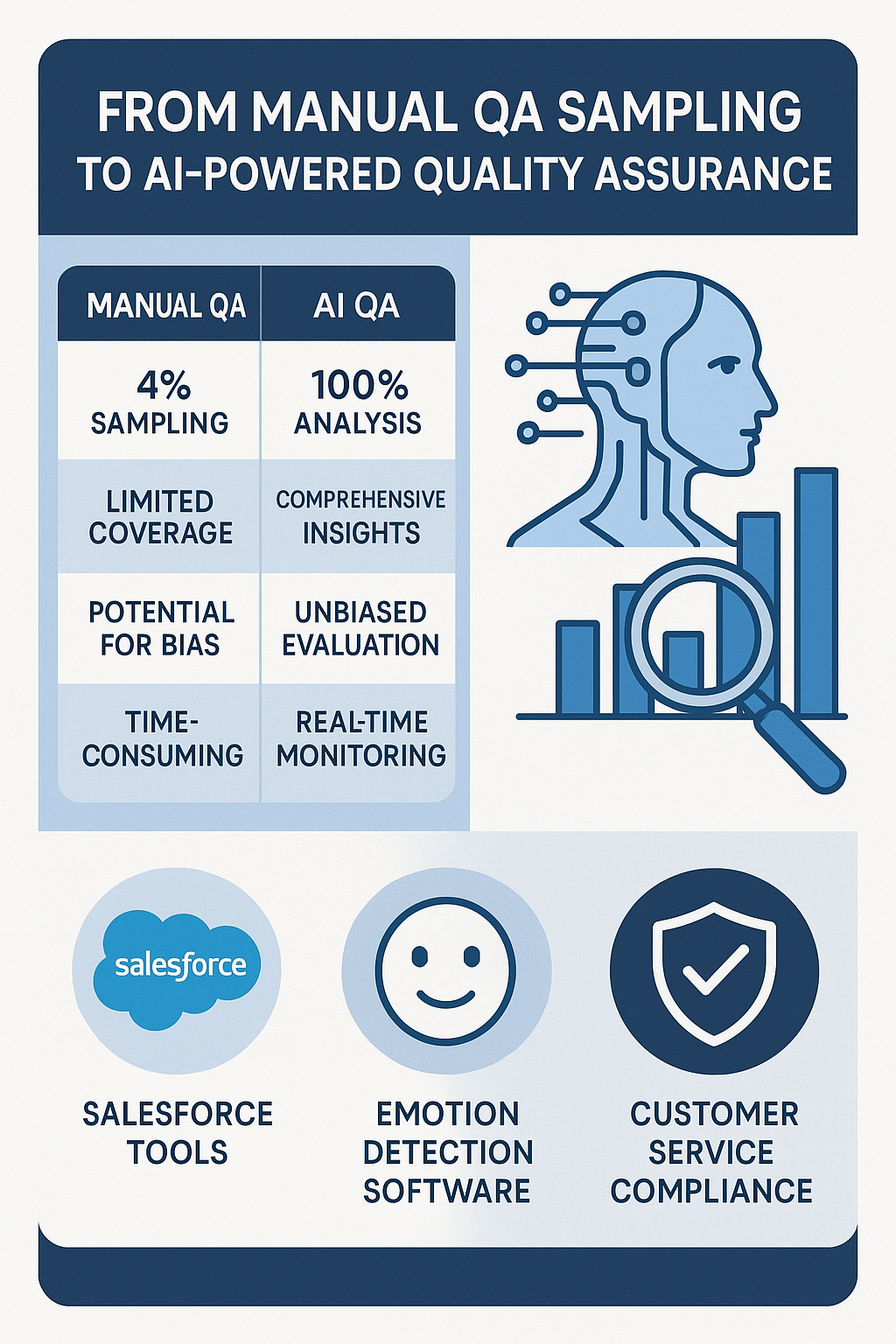
In the realm of quality assurance, the transition from manual QA sampling to comprehensive testing is crucial. Relying on a mere 4% sample can leave businesses vulnerable to errors and inefficiencies. This article explores the limitations of manual QA sampling and the benefits of adopting a more thorough approach, leveraging AI quality assurance, Salesforce QA tools, customer service compliance, and emotion detection software.
## The Limitations of Manual QA Sampling
Manual QA sampling involves testing a small percentage of interactions or processes to ensure quality. While this method can be cost-effective and time-saving, it often fails to capture the full picture. A 4% sample may miss critical errors, leading to significant issues down the line.
### Incomplete Data Analysis
Sampling only a fraction of interactions means that many potential problems go unnoticed. This incomplete data analysis can result in overlooking patterns or recurring issues that could be detrimental to customer satisfaction and operational efficiency.
### Human Error and Bias
Manual processes are inherently prone to human error and bias. The selection of samples may not be truly random, and personal biases can influence the assessment, leading to skewed results and unreliable conclusions.
### Limited Scope
The limited scope of manual QA sampling restricts the ability to identify and address all potential issues. This can lead to a false sense of security, where businesses believe their processes are sound when, in reality, they are exposed to significant risks.
## Embracing AI Quality Assurance
AI quality assurance offers a comprehensive solution to the limitations of manual sampling. By analysing 100% of interactions, AI provides a complete overview of quality and performance.
### Enhanced Accuracy and Efficiency
AI-driven tools can process vast amounts of data quickly and accurately. This eliminates the risk of human error and ensures that every interaction is evaluated, providing a more reliable assessment of quality.
### Real-Time Insights
AI quality assurance delivers real-time insights, allowing businesses to identify and address issues as they arise. This proactive approach enhances customer satisfaction and operational efficiency by preventing problems before they escalate.
### Scalability
AI solutions are highly scalable, making them suitable for businesses of all sizes. Whether dealing with a few hundred interactions or millions, AI can handle the workload without compromising on accuracy or speed.
## Leveraging Salesforce QA Tools
Salesforce QA tools are instrumental in ensuring the quality and reliability of customer relationship management processes. These tools integrate seamlessly with existing systems, providing a robust framework for quality assurance.
### Comprehensive Testing Capabilities
Salesforce QA tools offer comprehensive testing capabilities, covering everything from functionality to user experience. This ensures that all aspects of the CRM system are operating optimally, reducing the risk of errors and enhancing customer satisfaction.
### Automation and Integration
The automation features of Salesforce QA tools streamline the testing process, reducing the time and effort required for quality assurance. Integration with other systems ensures a cohesive approach to quality management, enhancing overall efficiency.
### Customisation and Flexibility
Salesforce QA tools are highly customisable, allowing businesses to tailor their quality assurance processes to meet specific needs. This flexibility ensures that the tools can adapt to changing requirements and continue to deliver value over time.
## Ensuring Customer Service Compliance
Customer service compliance is critical for maintaining trust and credibility. By ensuring that all interactions adhere to regulatory standards and company policies, businesses can protect their reputation and avoid costly penalties.
### Comprehensive Monitoring
AI quality assurance and Salesforce QA tools provide comprehensive monitoring of customer service interactions. This ensures that all communications comply with relevant regulations and standards, reducing the risk of non-compliance.
### Automated Reporting
Automated reporting features streamline the compliance process, providing detailed insights into performance and adherence to standards. This enables businesses to identify areas for improvement and take corrective action as needed.
### Continuous Improvement
By continuously monitoring and analysing customer service interactions, businesses can identify trends and areas for improvement. This ongoing process of refinement ensures that customer service remains compliant and effective.
## Harnessing Emotion Detection Software
Emotion detection software is a powerful tool for enhancing customer interactions. By analysing the emotional tone of communications, businesses can gain valuable insights into customer sentiment and tailor their responses accordingly.
### Understanding Customer Sentiment
Emotion detection software provides a deeper understanding of customer sentiment, allowing businesses to identify and address issues that may not be immediately apparent. This enhances the customer experience and builds stronger relationships.
### Personalised Interactions
By understanding the emotional context of interactions, businesses can personalise their responses to better meet customer needs. This personalised approach enhances satisfaction and loyalty, driving long-term success.
### Proactive Problem Solving
Emotion detection software enables businesses to identify potential issues before they escalate. By addressing concerns proactively, companies can prevent negative experiences and maintain a positive brand image.
## Conclusion: A New Era of Quality Assurance
Transitioning from manual QA sampling to comprehensive testing is essential for businesses seeking to enhance quality and efficiency. By embracing AI quality assurance, Salesforce QA tools, customer service compliance, and emotion detection software, companies can ensure that they are fully equipped to meet the demands of the modern marketplace. This holistic approach not only mitigates risks but also drives continuous improvement, setting the stage for sustained success.